
Acceptance and Commitment Therapy (ACT): making room for what hurts, moving towards what matters

Updated: Sep 27
Most of us have been taught that difficult thoughts and feelings are problems to be solved. If you feel anxious, calm down. If you feel low, cheer up. If a thought frightens you, push it away. The trouble is that this rarely works for long, and the struggle itself can end up taking over our lives.
Acceptance and Commitment Therapy, usually shortened to ACT and said as the word "act", takes a different route. Instead of trying to get rid of painful experiences, ACT helps you change your relationship with them, so that they have less power over what you do. The aim is not a life without pain, but a life that feels full and meaningful, even when pain shows up.
The six core skills of ACT
ACT builds what psychologists call psychological flexibility: the ability to stay in contact with the present moment and keep acting on what matters to you. In sessions we work on six connected skills.
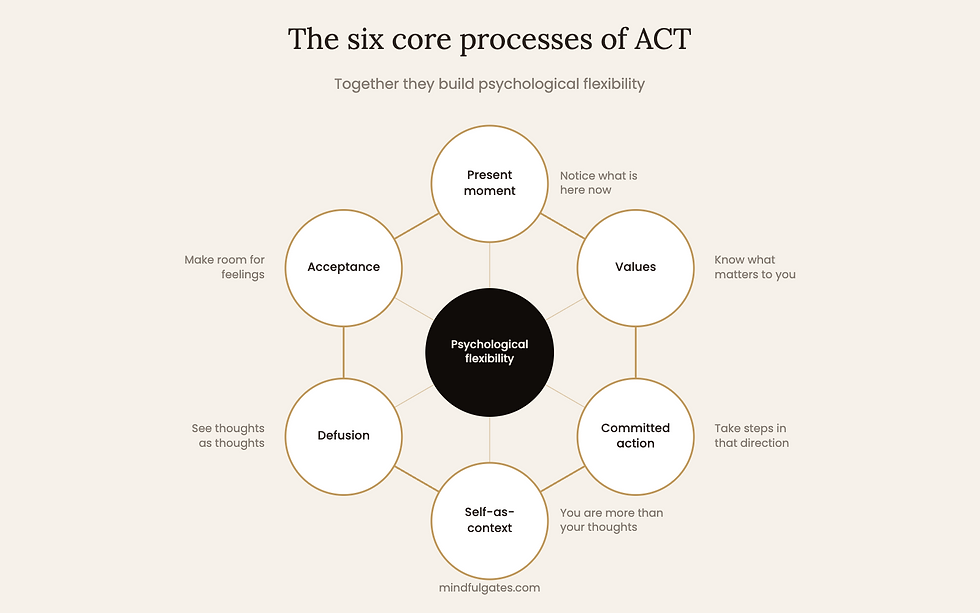
Acceptance: making room for feelings and sensations instead of fighting them.
Defusion: learning to see thoughts as thoughts, not as orders or facts. "I am a failure" becomes "I am having the thought that I am a failure".
Present-moment awareness: noticing what is happening now, rather than living in worries about the future or replays of the past.
Self-as-context: recognising that you are more than your thoughts, feelings and stories about yourself.
Values: getting clear on what you want your life to stand for, in relationships, work, health and faith.
Committed action: taking small, concrete steps in the direction of those values, again and again.
What ACT can help with
ACT has a growing research base and is used for anxiety, low mood, stress, long-term health conditions, chronic pain and the emotional impact of illness or injury. Because it focuses on how you respond to difficulty rather than on a particular diagnosis, it also suits people who feel stuck without being able to name exactly why.
A small exercise to try
Next time a harsh thought shows up, try adding a few words in front of it: "I notice I am having the thought that...". Say it slowly. You are not arguing with the thought or agreeing with it. You are simply stepping back far enough to see it. Many people find that this small gap gives them a little more choice about what to do next.
What ACT looks like with me
ACT is practical and experiential. Alongside talking, we use short exercises, metaphors and between-session practice, and we keep returning to one question: what would you do if this difficulty did not get to decide? I offer ACT online in Arabic or English, often combined with other approaches to suit you.
If you would like to explore whether ACT is right for you, you can request an initial consultation through the Request Appointment page.
Comments are open to members and are reviewed before they appear. Please don't share personal clinical details here. For personal concerns, contact us directly.


Comments